Best Tide Pools on the Washington Coast: 7 Spots Worth Exploring
The Oregon coast gets a lot of the tide pooling hype. But Washington? Washington is quietly home to some of the most spectacular intertidal zones on the entire Pacific Coast — and most people have no idea.
The Olympic Coast National Marine Sanctuary protects over 135 miles of rugged, rocky shoreline where scientists have identified more than 300 resident species of marine plants, invertebrates, and fish.
Sea stars, giant green anemones, purple urchins, chitons, nudibranchs, hermit crabs, sculpin — the biodiversity out here is genuinely world-class, and because so much of this coastline sits inside Olympic National Park and federal sanctuary boundaries, it’s remarkably well protected.
Here are the 7 best spots to go tide pooling on the Washington coast — from easy family-friendly access to proper wilderness adventures.
1. Rialto Beach — Hole in the Wall
Rialto Beach is one of the most dramatic and beloved beaches on the entire Olympic coast, and the tide pools at Hole in the Wall are the main event. About 1.5 miles up the beach from the Rialto parking area, a massive sea arch has been carved through a headland by the Pacific — and at low tide, the rocky shelves and pools surrounding it are absolutely teeming with life.
Purple sea stars, giant green anemones, hermit crabs, chitons, barnacles, and sculpin are all regular sightings. The walk up the beach through driftwood and past dramatic sea stacks is gorgeous in its own right. One of the best combinations of scenery and marine life anywhere in Washington.
Access: Drive to the Rialto Beach trailhead near Forks. Olympic National Park pass required ($30 for a 7-day vehicle pass). Note that Mora Road will be closed past Mora Campground between July 8 and October 5 — check NPS conditions before you go.
Effort: Easy beach walk, 3 miles round trip on flat sand.
📍 GET THE ULTIMATE PNW MAP 🗺️
Get our curated list of the best adventures, things to do, and places to grab a brew loaded onto your maps with just two clicks!
✅ Waterfalls ✅ Hikes ✅ Viewpoints
✅ Craft breweries ✅ National Parks ✅ 1400+ Pins


2. Salt Creek Recreation Area & Tongue Point — Port Angeles Area
Salt Creek Recreation Area on the Strait of Juan de Fuca is the most accessible world-class tide pooling on the Olympic Peninsula — and one of the best-kept secrets on the entire Washington coast. Tongue Point, a rocky outcropping within the park that extends into the strait and only emerges at low tide, is the star of the show.
At a good minus tide, the exposed rocks here reveal aggregating anemones, purple sea stars, colorful nudibranchs (sea slugs), chitons, limpets, sea squirts, Dungeness crabs, kelp forests, and sculpin darting through the shallows. The biodiversity is exceptional. The site is well-maintained, has restrooms and parking, and the dramatic views of the Strait of Juan de Fuca with the Olympic Mountains behind you don’t hurt either.
Access: About 14 miles west of Port Angeles off Highway 112. Parking fee applies. No permits needed for day-use tide pooling.
Effort: Easy — short walk from the parking area down to the rocky shore.
3. Shi Shi Beach & Point of the Arches
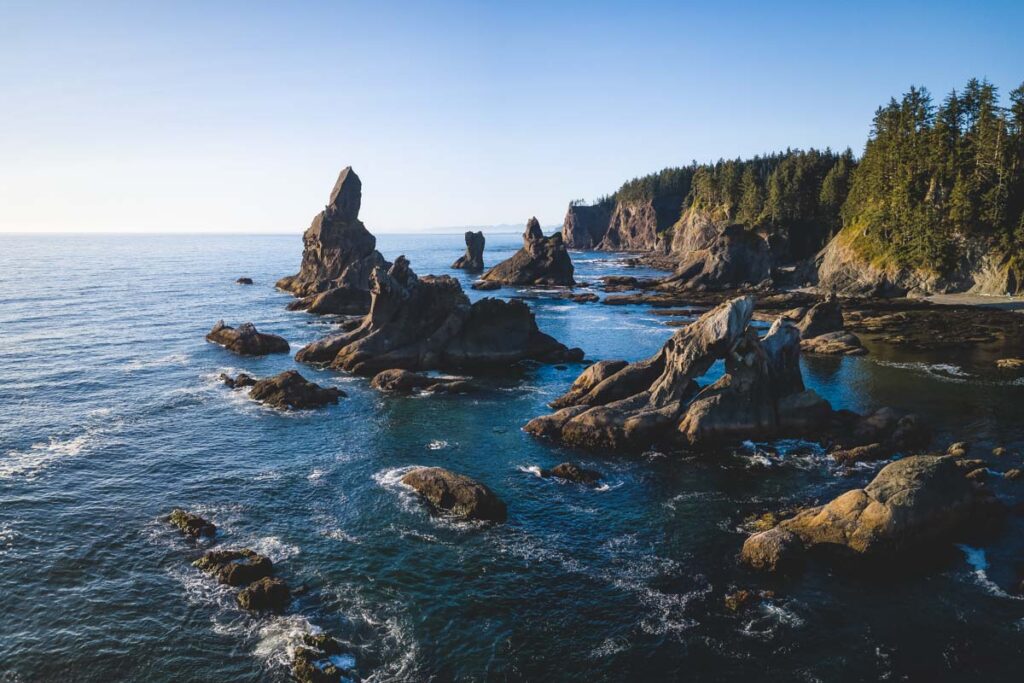
For serious adventurers, Shi Shi Beach and the Point of the Arches is the crown jewel of tide pooling on the Washington coast. This remote beach in the far northwest corner of Olympic National Park features over 30 dramatic sea stacks and natural arches carved by the Pacific — and at a minus tide, you can wander acres of exposed marine terrain through passageways of monolithic rock.
The tide pools here are among the densest and most diverse on the entire Olympic coast — sea stars, anemones, urchins, and marine creatures you won’t find at more accessible spots. The sheer scale of the Point of the Arches at low tide is something you have to see to believe.
It’s remote by design. The hike in is about 4 miles round trip on a muddy, forested trail that earns its reputation. Worth every step.
Access: Trailhead off Highway 112 near Neah Bay. Requires both a Makah Recreation Pass ($20/day) and an Olympic National Park pass ($30/7-day vehicle pass).
Effort: Moderate — 4-mile round trip with some muddy trail sections. Coastal backpacking is popular here for those wanting to stay overnight.
4. Kalaloch Beach 4
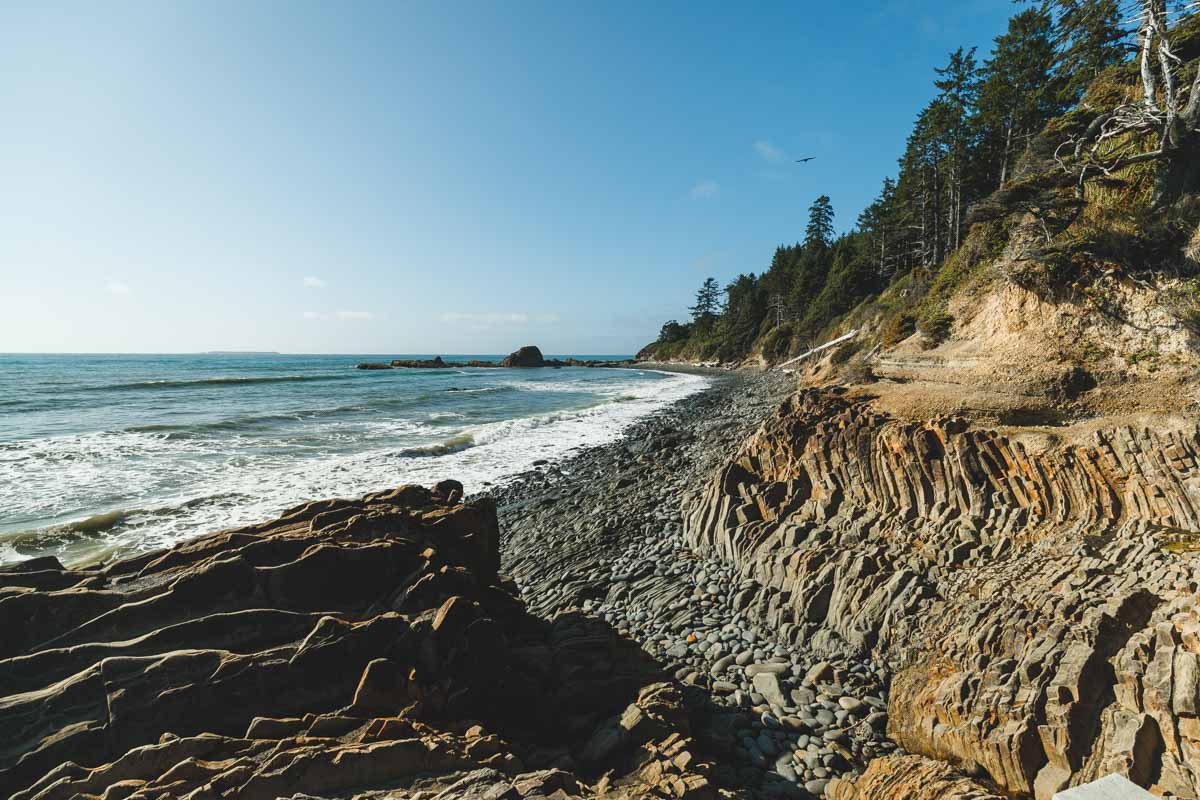
The Kalaloch area has multiple numbered beaches along Highway 101, and Beach 4 is the tide pooling standout of the bunch. The intertidal zone here is considered some of the most spectacular along the southern Olympic coast — sea stars are plentiful, the rocks are draped in gooseneck and acorn barnacles, and giant green anemones fill the pools in dense clusters.
The access is easy — a short trail down from the highway — and the beach itself sits in the Kalaloch area of Olympic National Park with big views of the open Pacific. If you’re already driving Highway 101 through the coast section of the park, Beach 4 is a non-negotiable stop.
Access: Look for Beach 4 signage on Highway 101, about 45 miles south of Forks. Olympic National Park pass required.
Effort: Easy — short trail down to the beach.
5. Second Beach — La Push
La Push is one of the most dramatic stretches of the Olympic coast, and Second Beach is a tide pooling gem that rewards the short hike to get there. A 1.5-mile forested trail drops you onto a wide, gorgeous beach framed by sea stacks and offshore rock formations — and at low tide, the rocky shelves along the headlands reveal anemones, sea stars, urchins, hermit crabs, and mussels in abundance.
Second Beach gets fewer people than nearby First Beach (which is right at La Push village), giving you a noticeably more peaceful experience. The scenery is spectacular regardless of the tide — but time your visit for a low one and it becomes something special.
Access: Second Beach trailhead off La Push Road, west of Forks. Olympic National Park pass required for parking.
Effort: Easy — 1.5-mile round trip on a well-maintained forested trail.
🏨 Need a place to crash nearby?
From rustic cabins to boutique inns—check prices and availability in just a click.
6. Ruby Beach
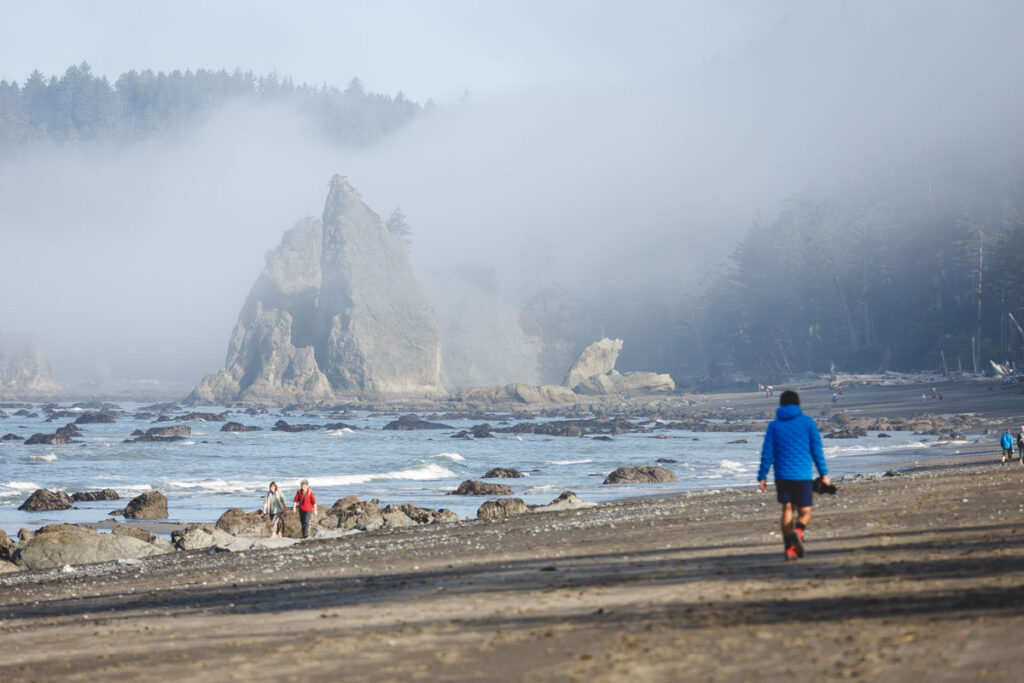
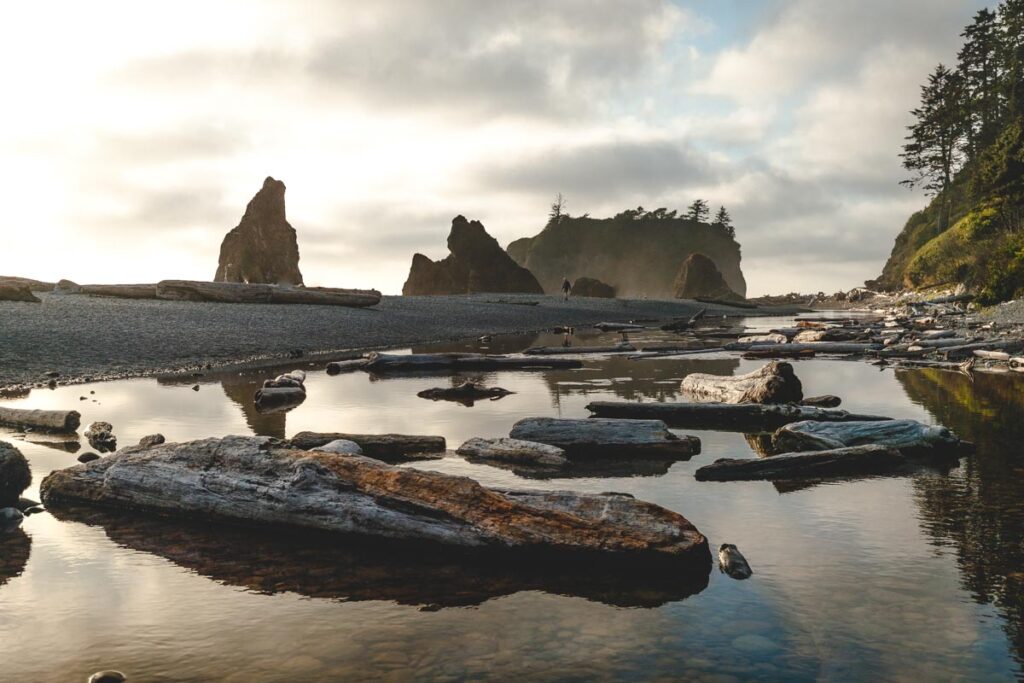
Ruby Beach is probably the most photographed beach on the Olympic coast — sea stacks, driftwood logs the size of buses, and a sweeping black sand shoreline that looks like the edge of the world. The tide pools here don’t always get top billing, but they’re excellent, with a good variety of marine life around the offshore rock formations and along the headland.
It’s also the most accessible dramatic beach on this entire list — a short trail from a parking lot right on Highway 101. Great entry point for families or anyone who wants the wow factor without a serious hike.
Access: Directly off Highway 101 at the Ruby Beach turnout, north of Kalaloch. Olympic National Park pass required.
Effort: Very easy — short, flat trail to the beach.
7. Cape Flattery — Makah Territory
Cape Flattery is the most northwestern point in the contiguous United States, and the tide pooling in the sea caves and rocky shelves below the cape viewpoints is extraordinary. This is remote, wild, exposed coastline at its most dramatic — massive surge channels, sea stacks, and pools accessible at low tide that feel like they belong in another world.
The 1.5-mile round trip boardwalk trail through old-growth Sitka spruce to the viewpoints is stunning in its own right. Orcas, gray whales, sea otters, and bald eagles are common sightings offshore. One of the most wild and memorable spots on the entire Washington coast.
Access: Near Neah Bay on the Makah Reservation. A Makah Recreation Pass ($20/day) is required — purchase online or at the Makah Marina before arrival at makah.com.
Effort: Easy — 1.5-mile round trip boardwalk trail.
Tips for Tide Pooling on the Washington Coast
Aim for minus tides. The NPS recommends a tide of +2 feet or lower to see most pools — a minus tide exposes dramatically more terrain. Check NOAA’s tide charts before every trip.
Go 1–2 hours before low tide. Watch the pools emerge as the water retreats — you’ll have more time to explore as the tide continues to go out.
Sneaker waves are real. The Olympic coast is exposed, wild, and unpredictable. Never turn your back on the ocean, especially at the more exposed spots like Cape Flattery and Shi Shi Beach.
Look, don’t touch. The Olympic Coast National Marine Sanctuary and Olympic National Park fully protect all intertidal life. Don’t pick up animals, flip rocks, or pocket anything. Even oils from your hands can harm anemones.
Wear the right shoes. Grippy waterproof boots or trail shoes with good traction are essential — wet Olympic coast rocks are seriously slippery.
Get your passes sorted first. Most spots require an Olympic National Park pass ($30/7-day vehicle), and Makah territory spots require a separate Makah Recreation Pass ($20/day). Sort both before you leave — there’s limited cell service out here.
More Olympic Coast Adventures
The Washington coast is one of the most wild and undervisited stretches of coastline in the country. For more, check out our guides to Olympic National Park beaches, things to do in Olympic National Park, La Push beaches, and the best hikes in Olympic National Park to plan the full trip.
Happy exploring, friend!