Washington’s most photographed sea stacks sit on tribal land, and reaching them takes two separate permits
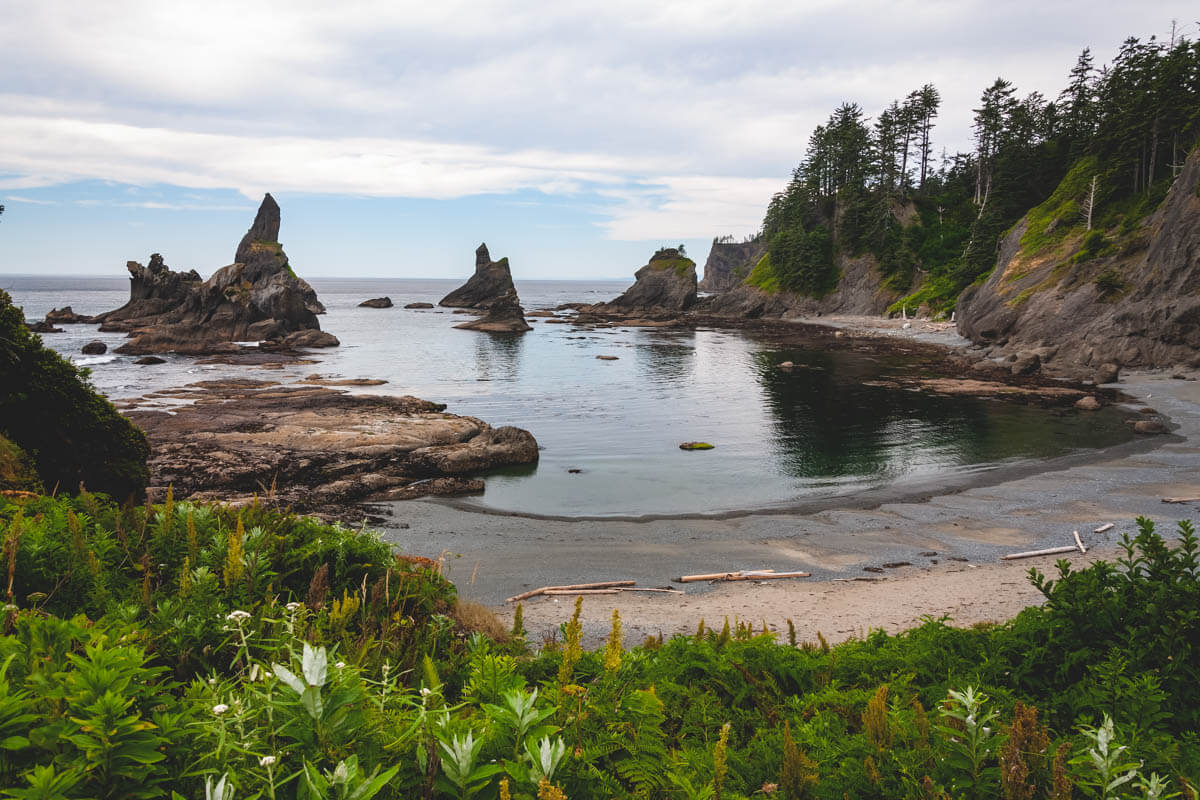
Point of Arches is arguably the single most striking stretch of coastline in Washington, and most people have never heard of it. Getting there means clearing permits from two completely separate governments before you’ve even laced up your boots.
The reward: a mile-long procession of sea stacks rising straight out of the surf at the south end of Shi Shi Beach, tide pools worth an afternoon, and one of the more photographed corners of the entire Olympic Coast. Here’s what the trip actually takes.
Psst — we made you a West Coast Adventure Map. Nearly 1,900 of our favorite spots, already pinned, ready to load into Google Maps in two clicks — grab it here.
Two landowners, two permits
The trail starts on the Makah Reservation and ends in Olympic National Park, so you’re crossing tribal land and federal wilderness in the same eight miles. That means two separate passes, and skipping either one gets you turned around or fined.
The Makah Recreation Pass costs $20 per vehicle and covers you for the calendar year — buy it in Neah Bay at the tribal museum, the marina, or a handful of other spots in town, or grab it online before you go. Day hikers don’t need anything beyond that.
Planning to camp on the beach instead? You’ll also need an Olympic National Park wilderness permit, reserved in advance through Recreation.gov. It runs $8 per adult per night plus a flat $6 reservation fee, and summer-season reservations typically open in mid-April.
📍 GET THE ULTIMATE PNW MAP 🗺️
Get our curated list of the best adventures, things to do, and places to grab a brew loaded onto your maps with just two clicks!
✅ Waterfalls ✅ Hikes ✅ Viewpoints
✅ Craft breweries ✅ National Parks ✅ 1400+ Pins


What eight miles of trail actually feels like
From the trailhead near the fish hatchery, it’s roughly four miles one way to Point of Arches — about eight round trip — with elevation gain topping out around 200 feet. Don’t let that low number fool you into thinking it’s easy.
The first mile is newer trail through second-growth forest, with boardwalks over the wettest spots. The second mile is where it gets messy: expect standing mud for long stretches no matter how recently it’s rained.
Right before the trail drops to the beach, it turns steep fast — steep enough that ropes are strung along the slope as handrails. Take your time on the way down; it’s an easier climb back up than it looks from the top.
The payoff (and yes, it’s pronounced “shy-shy”)
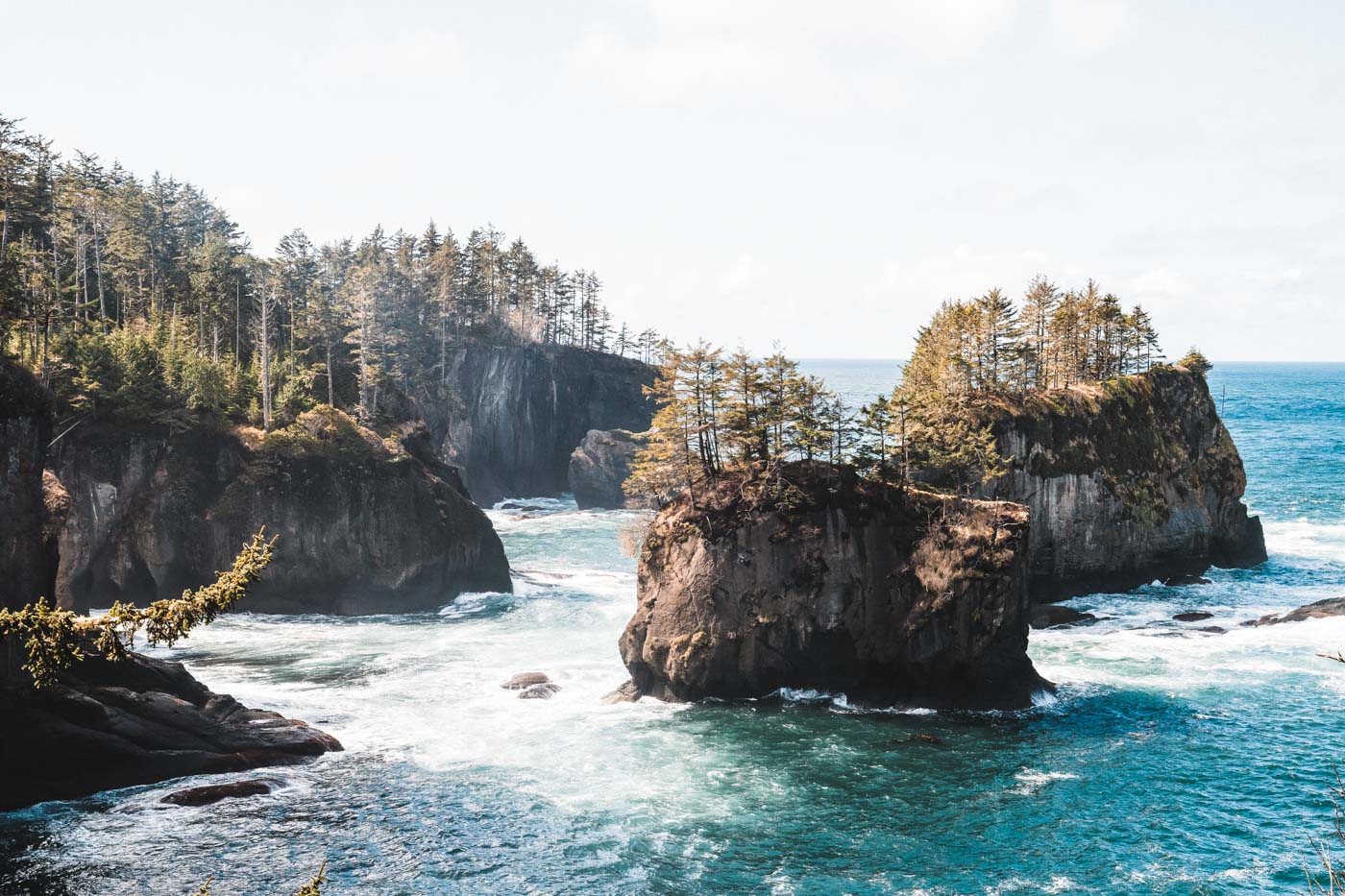
Once you hit the sand, the trail disappears and the beach takes over for the next two miles south. Point of Arches sits at the far end: a run of sea stacks and rock arches you can walk out among at low tide, with tide pools tucked into nearly every gap.
Time your visit around a minus tide if you can swing it — that’s when the arches, tide pools, and offshore rocks are most walkable. Bring a printed tide table; cell service out here isn’t something to count on.
One more thing before you tell anyone where you’re headed: it’s pronounced “shy-shy,” not “she-she.” Get it right and you’ll skip the good-natured correction from anyone who’s hiked it before you.
Where to camp if you’re staying the night
Three main camping areas line the beach, each marked with an orange trail tag. The one right where the trail meets the sand sits closest to the trailhead but has no reliable water source.
Petroleum Creek, about a mile down the beach, is the easiest of the three to recommend — dependable water and a solid view of the arches without adding another mile of walking. Willoughby Creek, nearly two miles down, sits almost on top of Point of Arches itself, if you don’t mind carrying your gear that much farther.
A bear canister is required for every overnight stay — the local raccoons have a reputation for outsmarting anything less. Dogs aren’t allowed once you cross into the national park, even though the reservation portion doesn’t carry that restriction.
Getting to the trailhead without a headache
From Port Angeles, it’s US-101 west for about five miles, then SR-112 west for roughly 64 miles into Neah Bay, followed by Cape Flattery Road and Hobuck Road to the trailhead. Budget close to two hours from Port Angeles alone, more once you factor in the drive out to the peninsula in the first place.
Day-use parking at the trailhead is free, but overnight parking isn’t allowed there. Overnighters park at a private lot about half a mile back down the road instead, cash only, around $10 a day.
If Point of Arches has you wanting more of the Olympic Coast, we’ve rounded up the rest of the park’s best beaches here.
Two permits and a muddy mile and a half is a small price for a beach most of Washington still doesn’t know about. How many sea stacks does it take before a spot stops feeling hidden?
Trip tips: grab a rental car to make the drive out to Neah Bay, or lock in a hotel in Port Angeles the night before so you’re not racing the clock at dawn.
Rules and fees change — always confirm current requirements before you go.