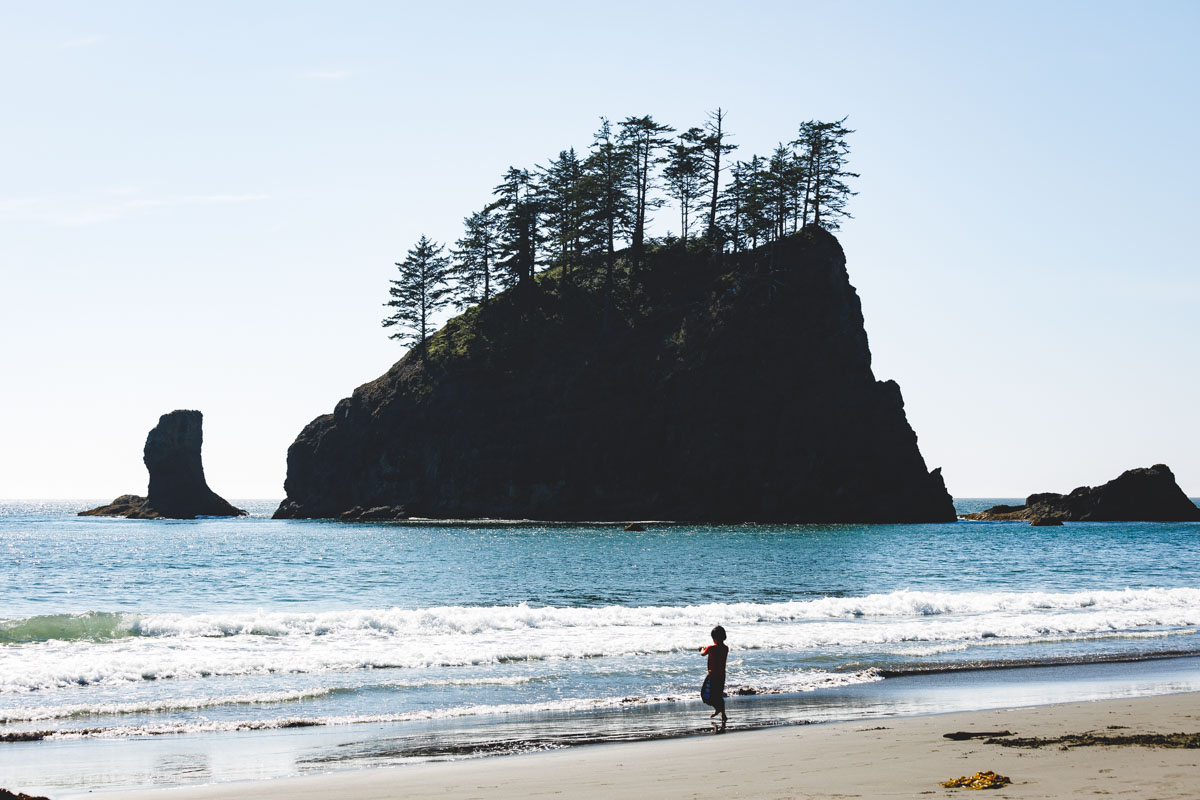
The sea stacks off Washington’s Second Beach have been a protected wildlife refuge since 1907, and you still can’t set foot on one
Second Beach doesn’t look like it’s hiding anything. Sand, driftwood, and sea stacks rising straight out of the surf — it’s one of the most photographed stretches of the whole Olympic coast. But the rocky islands sitting half a mile offshore have been legally off-limits to people since 1907, and nobody’s touched that ban since.
Psst — we made you a West Coast Adventure Map. Nearly 1,900 of our favorite spots, already pinned, ready to load into Google Maps in two clicks — grab it here.
Getting there is refreshingly uncomplicated for a beach this good. From Forks, drive west on La Push Road for about 14 miles to the trailhead, then walk roughly 0.7 miles through coastal forest to the sand — call it 20 to 30 minutes each way, longer if the trail’s muddy, which it often is.
The trail crosses onto the Quileute Indian Reservation before the beach opens up. La Push itself is the reservation’s main village, and the tribe has called this stretch of coast home for generations — worth remembering as you pass through, not just background scenery.
The trees break open all at once, and you’re standing on one of the best short hikes on the Olympic Peninsula. Driftwood stacks up in silver-gray piles, and the sea stacks do the rest — including one with a hole punched clean through the rock that lines up with the sunset on a clear evening.
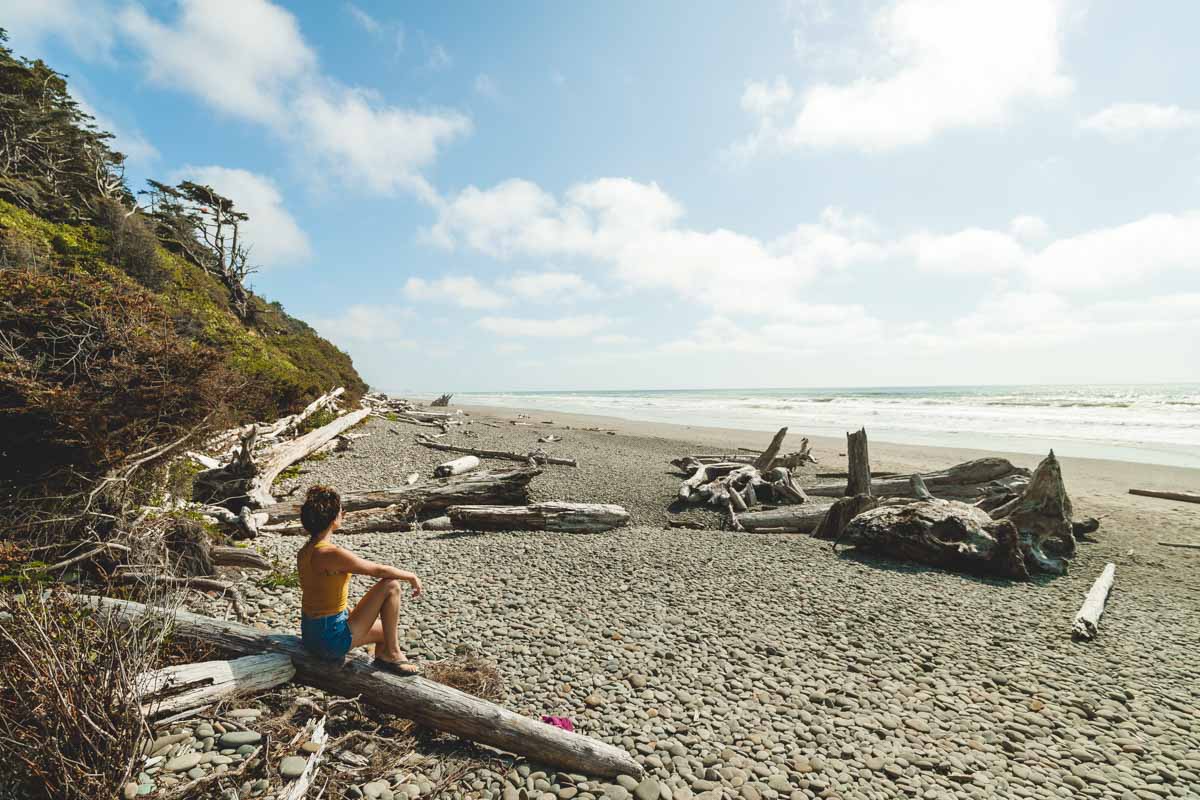
My personal move: time it for an outgoing tide in the late afternoon, when the light angles low across the sand and the stacks throw long shadows. Ever notice how the best views always ask you to earn them first? This one barely does, and it still delivers.
Why you can look but never land
Half a mile out, those rocks, reefs, and tiny islands belong to the Quillayute Needles National Wildlife Refuge — one of three refuges, alongside Flattery Rocks and Copalis, that Theodore Roosevelt set aside in 1907 to protect nesting seabirds. Together they cover roughly 800 offshore formations stretching from Cape Flattery down past Copalis Head.
The refuge itself is closed to all public access, and boats can’t come within 200 yards of the rocks either. My take: that closure is exactly why the seabirds still show up here by the thousands — treat it as part of the view, not a rule getting in your way.
📍 GET THE ULTIMATE PNW MAP 🗺️
Get our curated list of the best adventures, things to do, and places to grab a brew loaded onto your maps with just two clicks!
✅ Waterfalls ✅ Hikes ✅ Viewpoints
✅ Craft breweries ✅ National Parks ✅ 1400+ Pins


One thing to know before you go
Rialto Beach, a few miles north near Mora Campground, is closed to cars, bikes, and foot traffic through mid-October while crews repair a stretch of road damaged by river erosion. Second Beach isn’t affected at all, so if Rialto was the beach on your list this summer, this is the swap — and it pairs well with the rest of the La Push beach network.
Trip tips: grab a rental car to get out to the peninsula, lock in a hotel in Forks or Port Angeles before summer rooms disappear, or bring a camper van and park closer to the coast.
Rules and fees change — always confirm current requirements before you go.