Spokane’s most famous rock formation is named after kitchenware, and an Ice Age flood built it in one violent event
A “bowl” and a “pitcher” sitting inside a state park nine miles from downtown Spokane sound like something a landscaper dreamed up. They’re not. They’re basalt — a circular depression carved into the Spokane River and a massive, fractured chunk of rock beside it — and the thing that put them there was one of the largest floods in Earth’s history.
Psst — we made you a West Coast Adventure Map. Nearly 1,900 of our favorite spots, already pinned, ready to load into Google Maps in two clicks — grab it here.
The flood that built a bowl and a pitcher
The basalt cliffs lining this stretch of the Spokane River came from lava flows that reached the area around 16 million years ago, part of the same Columbia River Basalt Group that shaped so much of Eastern Washington. That’s just the base layer, though. The “Bowl” and “Pitcher” themselves — a circular depression in the river and a huge, detached block of shattered rock beside it — got dropped into place much more recently, geologically speaking.
Around 17,000 years ago, Ice Age floods roared out of glacial Lake Missoula and tore through this canyon, ripping away weaker layers of clay, sand, and silt sandwiched between older lava flows. Whatever rock had been sitting on top of that soft material lost its footing and tumbled down into the jumbled position it holds today. It’s not a subtle process, and it shows: this is one of the most photographed sites in the park for a reason.

📍 GET THE ULTIMATE PNW MAP 🗺️
Get our curated list of the best adventures, things to do, and places to grab a brew loaded onto your maps with just two clicks!
✅ Waterfalls ✅ Hikes ✅ Viewpoints
✅ Craft breweries ✅ National Parks ✅ 1400+ Pins


A bridge the CCC built twice
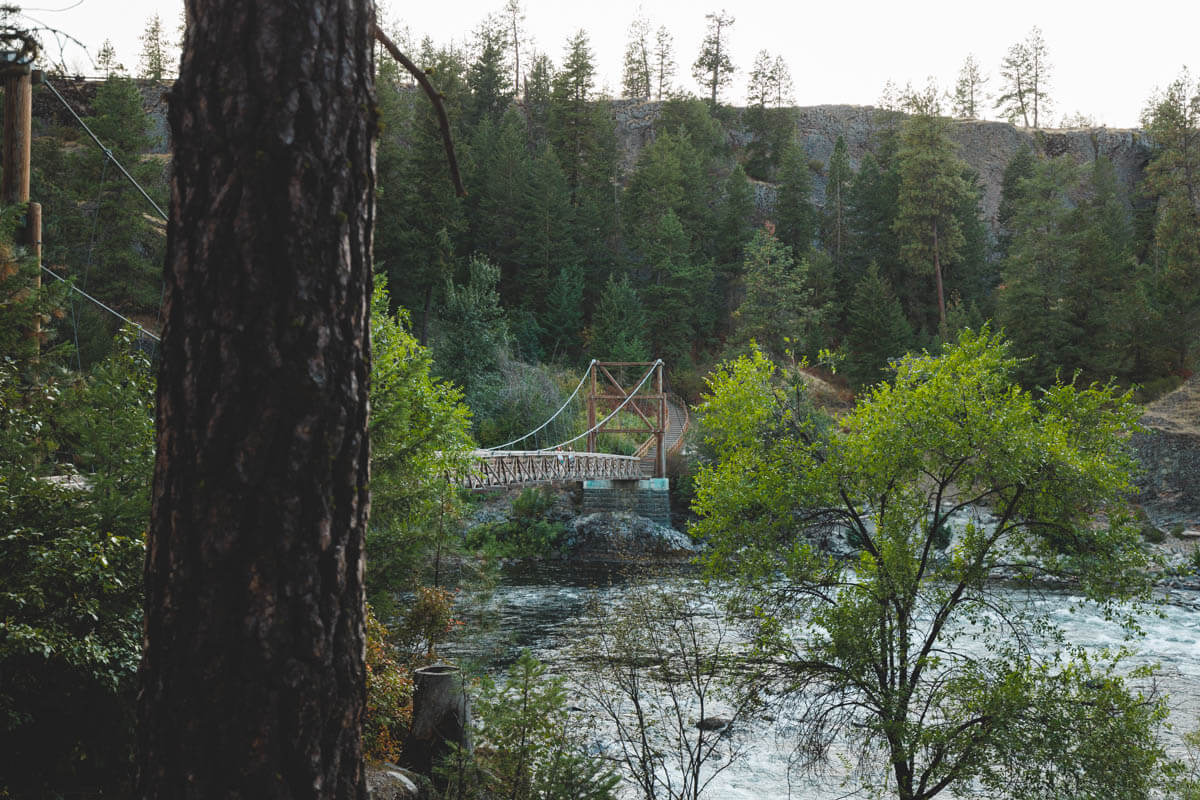
The suspension bridge crossing the river here has its own strange origin story. Civilian Conservation Corps workers based at nearby Camp Seven Mile built the original bridge in pieces during the 1930s, loosely assembling it near camp first to make sure everything fit, then taking it back apart, trucking it to the river, and reassembling it on-site.
That original CCC bridge eventually wore out. Washington State Parks rebuilt it to the same rustic design and rededicated it on May 27, 1999, and it’s still the crossing hikers use today. The bridge is wheelchair accessible, which is a nice surprise for a spot whose whole reputation rests on looking rugged.
The hike across it
Once you’re across the bridge, the Bowl and Pitcher Loop is an easy 2.1 miles with about 144 feet of elevation gain — call it 30 to 60 minutes if you’re not stopping every five feet for photos, which, honestly, you will be. Head downstream on Trail 25 and you’ll pass the Dragon Tooth rapids, where more of that same jumbled basalt breaks up the current.
This is not a hike that rewards showing up expecting solitude. It’s one of the most accessible, most photogenic trails in the park, and it draws a crowd on any decent weekend. Go on a weekday morning if you actually want the bridge to yourself for a minute.
Planning the visit
The Bowl and Pitcher sits inside Riverside State Park, Washington’s second-largest state park at more than 9,000 acres along the Spokane and Little Spokane Rivers. There’s plenty more to it than this one formation — if you’re making a day of it, it’s worth pairing with some of the other outdoorsy things to do around Spokane first.
Because this is Washington state land, you’ll need a Discover Pass displayed to park. Trip tips: grab a rental car to get out here, or lock in your hotel in Spokane before the good rooms are gone.
So: kitchenware names, a bridge that got built twice, and a flood bigger than anything you’ll ever stand in front of again. Not bad for an afternoon nine miles from downtown.
Rules and fees change — always confirm current requirements before you go.