Seattle’s largest park was an active Army fort for 70 years, and it took an occupation to get part of it back
Seattle’s biggest park almost stayed a military base forever. Discovery Park’s more than 500 acres of bluffs, forest, and beach used to be Fort Lawton, an active Army post for about seventy years — and the only reason you can walk any of it today is that a group of Native activists occupied the land in 1970 and refused to leave until the city negotiated.
Psst — we made you a West Coast Adventure Map. Nearly 1,900 of our favorite spots, already pinned, ready to load into Google Maps in two clicks — grab it here.
An army post that saw more paperwork than combat
Construction started on Magnolia Bluff in 1898, and the post was named Fort Lawton in 1900, after Major General Henry W. Lawton. It sat mostly underused between wars, until World War II, when it processed troops headed to the Pacific and held up to 1,400 German and Italian prisoners of war.
By the late 1960s, the Army barely needed the place. That’s when things got interesting.
📍 GET THE ULTIMATE PNW MAP 🗺️
Get our curated list of the best adventures, things to do, and places to grab a brew loaded onto your maps with just two clicks!
✅ Waterfalls ✅ Hikes ✅ Viewpoints
✅ Craft breweries ✅ National Parks ✅ 1400+ Pins


The occupation that got the land back
In March 1970, activist Bernie Whitebear and the United Indians of All Tribes staged an organized takeover of part of Fort Lawton, claiming land they argued belonged to the region’s tribes. The story made national news, and after five months of negotiations, the city agreed to a 99-year lease for what became the Daybreak Star Indian Cultural Center, completed in 1977.
The Army surplused most of the rest of the fort in 1971, the city took ownership in 1972, and Discovery Park opened in 1973 — named for HMS Discovery, the ship Captain George Vancouver sailed into Puget Sound in 1792.
What’s actually out there now
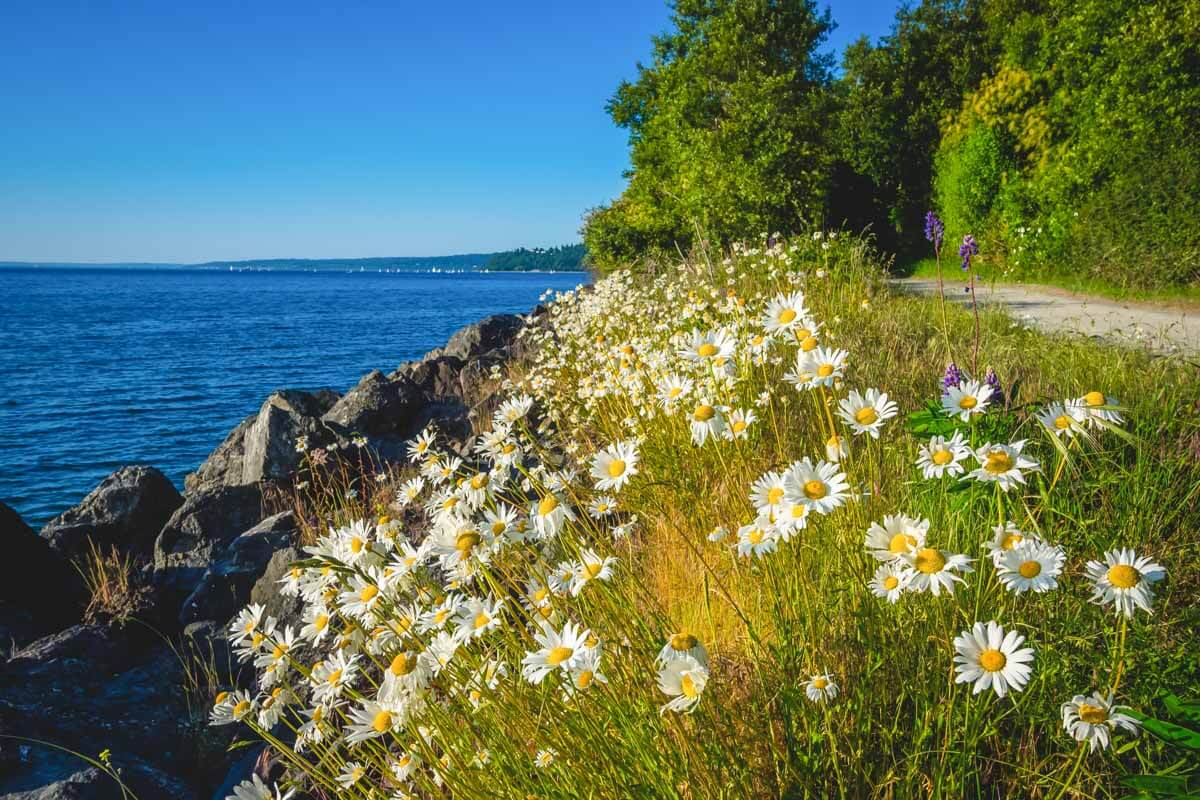
Discovery Park has nearly 12 miles of trails across meadow, forest, and more than two miles of protected beach — more open space than any other park in the city, by a wide margin. The easiest way to see most of it is the Discovery Park and Lighthouse Loop, a 4.4-mile route with about 469 feet of elevation gain, rated easy and doable in under two hours.
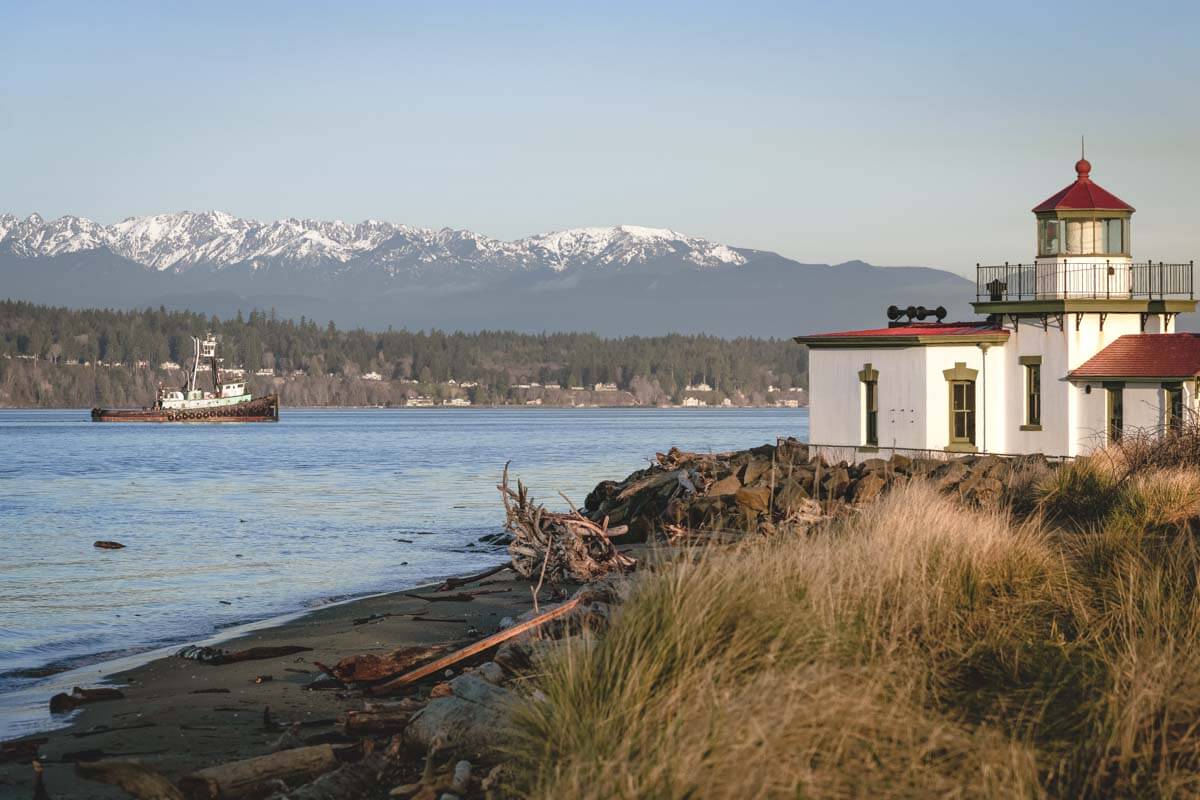
That loop ends at West Point Lighthouse, which has marked the entrance to Elliott Bay since 1881 and was the first manned light station on Puget Sound. It’s barely 23 feet tall, still an active aid to navigation, and somehow more striking for being so small.
Skip the line at the Space Needle for an afternoon and come here instead — you get Olympic Mountains views, a working lighthouse, and a fraction of the crowd. Why fight for a parking spot downtown when this is twenty minutes away?
Dogs are welcome on leash but aren’t allowed on the beach. If you want to park at beach level, grab a permit at the Environmental Learning Center (Tuesday through Sunday, 8:30 a.m. to 5 p.m.); otherwise it’s a walk down from the main lots. The park itself is free and open daily from 4 a.m. to 11:30 p.m.
It’s one of the best stops on our list of the best parks in Seattle, and if you’re building out a full day in the city, our full Seattle guide has the rest of what’s worth your time.
Trip tips: grab a rental car to get out here, lock in your hotel before the good rooms are gone, or skip both and book a camper van instead.
Rules and fees change — always confirm current requirements before you go.