
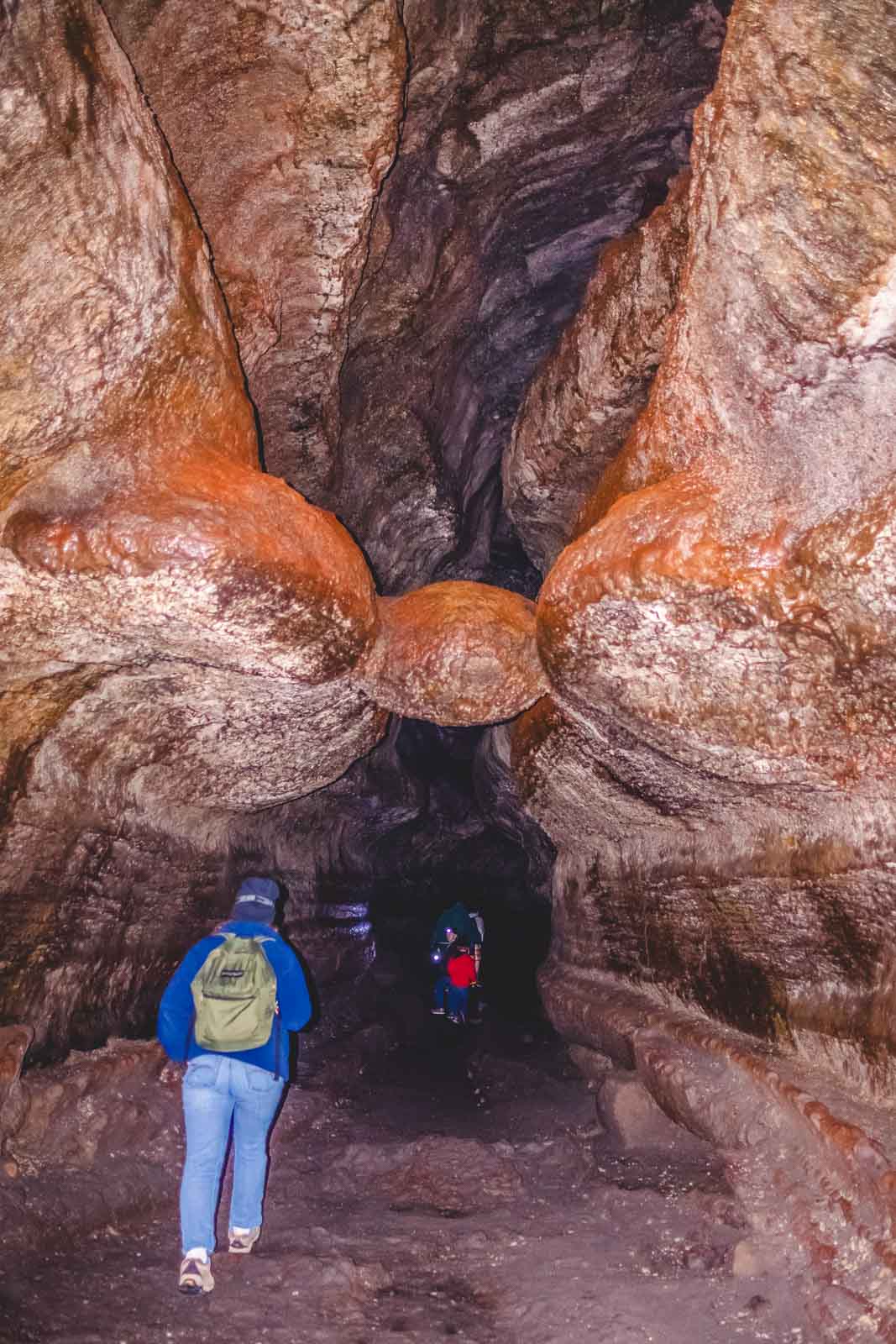
The longest lava tube in the continental U.S. sits under Mount St. Helens, and it never warms past 42 degrees
Everyone treats Mount St. Helens like a viewpoint you drive up to, snap a photo, and leave. Underneath the volcano’s south side runs a two-and-a-half-mile tunnel that stays exactly 42 degrees year-round, whether it’s snowing outside or pushing 90.
That’s Ape Cave — the longest continuous lava tube in the continental U.S., carved by a Mount St. Helens lava flow roughly 2,000 years ago. No permit lottery, no all-day approach hike. You park, grab two light sources, and walk straight into it.
Psst — we made you a West Coast Adventure Map. Nearly 1,900 of our favorite spots, already pinned, ready to load into Google Maps in two clicks — grab it here.
What you’re actually walking into
Ape Cave formed when a lava flow crusted over on the outside while the molten rock underneath kept moving, leaving a hollow tube behind once it drained. It’s the third-longest lava tube in North America by total mapped length, and the longest single, unbranched tube in the Lower 48.
The whole system runs about 2.5 miles, split into two very different halves at the entrance stairwell — one almost anyone can walk, and one that makes you work for it.
📍 GET THE ULTIMATE PNW MAP 🗺️
Get our curated list of the best adventures, things to do, and places to grab a brew loaded onto your maps with just two clicks!
✅ Waterfalls ✅ Hikes ✅ Viewpoints
✅ Craft breweries ✅ National Parks ✅ 1400+ Pins


Lower cave vs. upper cave — pick your adventure level
The lower cave is the easy call: a ¾-mile, one-way route over a relatively level, mudflow-covered floor, doable in about an hour round trip. It’s the family-friendly side, and the one most people mean when they say they “did Ape Cave.”
The upper cave is the other story — 1.5 miles one-way, starting with an eight-foot rock wall climb and a scramble over rockfall before it opens back up. Finish it and you exit aboveground, then hike 1.5 miles back to the parking lot through the forest; budget around two and a half hours for the whole route.
Reservations, fees, and what to actually bring
Ape Cave is only open May 18 through October 31 — it’s closed to the public all winter. During the open season, a timed reservation is required per vehicle: pick a two-hour entry window on recreation.gov for a $2 admin fee, then cover the $5 day-use fee on top — a Northwest Forest Pass works instead of the cash fee.
Bring two independent light sources per person — your phone flashlight alone won’t cut it — plus sturdy shoes and a real layer, because 42 degrees feels a lot colder once you’ve been walking around in July heat all day. Pets, food, alcohol, and camping are all off-limits inside the cave.
A 2,000-year-old tunnel that never warms past 42 degrees while the rest of the state bakes — lower cave for the easy win, or upper cave to actually earn it?
Trip tips: grab a rental car to reach Cougar, lock in a hotel nearby, or skip both and book a camper van instead — the area’s stacked with forest campgrounds if you want to make a weekend of it.
Rules and fees change — always confirm current requirements before you go.