Spokane’s Riverfront Park was a rail yard until 1974, and it’s getting a zipline over the falls this fall
Fifty-two years ago, the ground under Spokane’s most popular park was a maze of railroad tracks, warehouses, and coal smoke, and its waterfall was almost impossible to see. Then the city hosted a World’s Fair, tore the rail yard out by the roots, and handed the whole 100 acres back to the river. This fall, a new 1,400-foot zipline is about to give visitors the best look at that waterfall anyone’s had in over a century.
Psst — we made you a West Coast Adventure Map. Nearly 1,900 of our favorite spots, already pinned, ready to load into Google Maps in two clicks — grab it here.
A rail yard turned into a World’s Fair
Riverfront Park’s land sat buried under train tracks and industrial buildings until Spokane won the bid to host Expo ’74. The fair ran on the motto “Progress Without Pollution” — the first World’s Fair ever built around an environmental theme — and drew about 5.6 million visitors that summer.
When the gates closed, Spokane did something most host cities don’t: it kept the fairgrounds instead of tearing them down. That decision is the reason downtown Spokane has a 100-acre park with a waterfall running through the middle of it today.
📍 GET THE ULTIMATE PNW MAP 🗺️
Get our curated list of the best adventures, things to do, and places to grab a brew loaded onto your maps with just two clicks!
✅ Waterfalls ✅ Hikes ✅ Viewpoints
✅ Craft breweries ✅ National Parks ✅ 1400+ Pins


The waterfall the whole park is built around
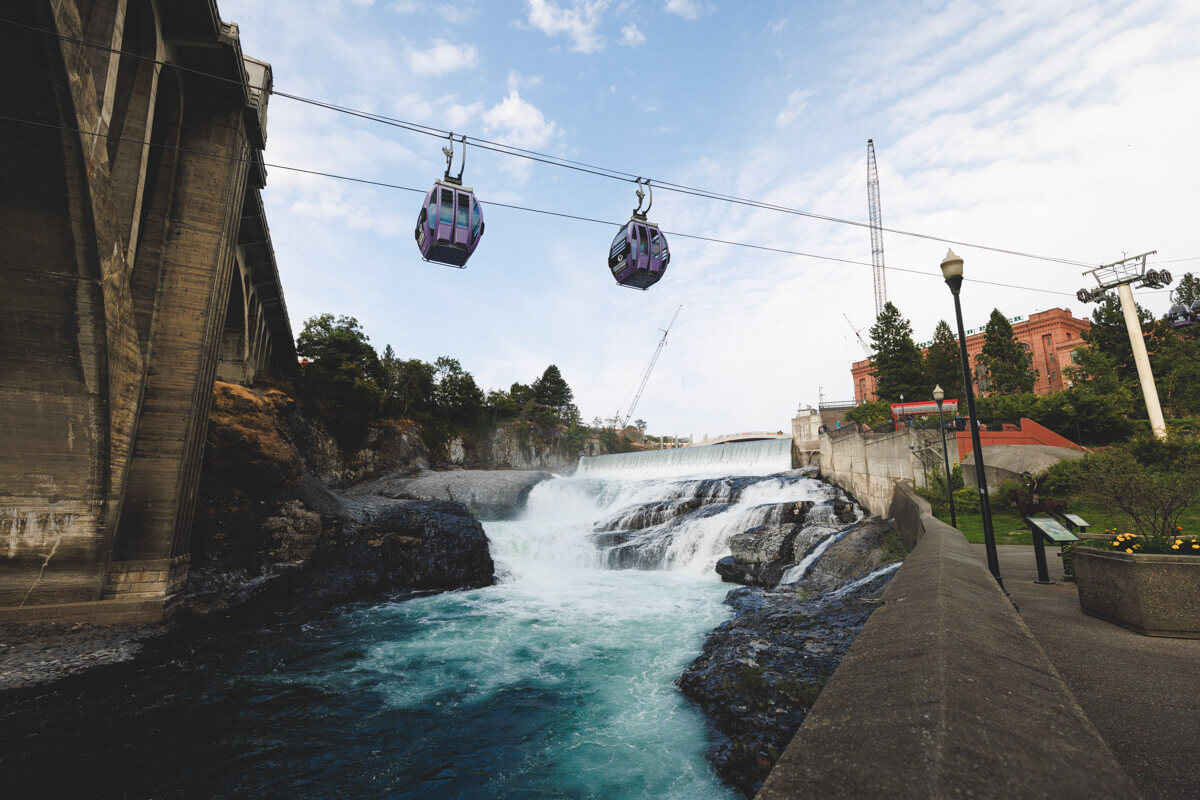
Spokane Falls splits into an Upper and Lower section right through downtown, and travel writers have called it the largest urban waterfall in the country. Most of what you see today runs through dams that also power the city — the Monroe Street Dam at the Lower Falls has generated electricity since 1890, making it the longest continuously running hydroelectric plant in Washington.
The Numerica SkyRide, a gondola first installed for Expo ’74 and rebuilt in 2005, still drops riders 200 feet down into the gorge on a 15-to-20-minute round trip. Condé Nast Traveler has named it one of the best scenic cable rides in the world — skip the line if you’re short on time, though, since the walk across the Monroe Street Bridge gives you almost as good a view for free.
What survived the World’s Fair
The Great Northern Railway’s 1902 clock tower is the one piece of the old rail yard Spokane couldn’t bring itself to tear down. The depot around it was demolished to make room for Expo ’74, but the 155-foot tower stayed standing, its 9-foot clock faces still keeping time over the park.
A few years after the fair, the city brought back a piece of an even older amusement park: the 1909 Looff Carrousel, hand-carved with 54 horses, a giraffe, a tiger, and two Chinese dragon chairs. It sat in storage after its original home, Natatorium Park, closed in the late 1960s, until Riverfront Park gave it a new building in 1975.
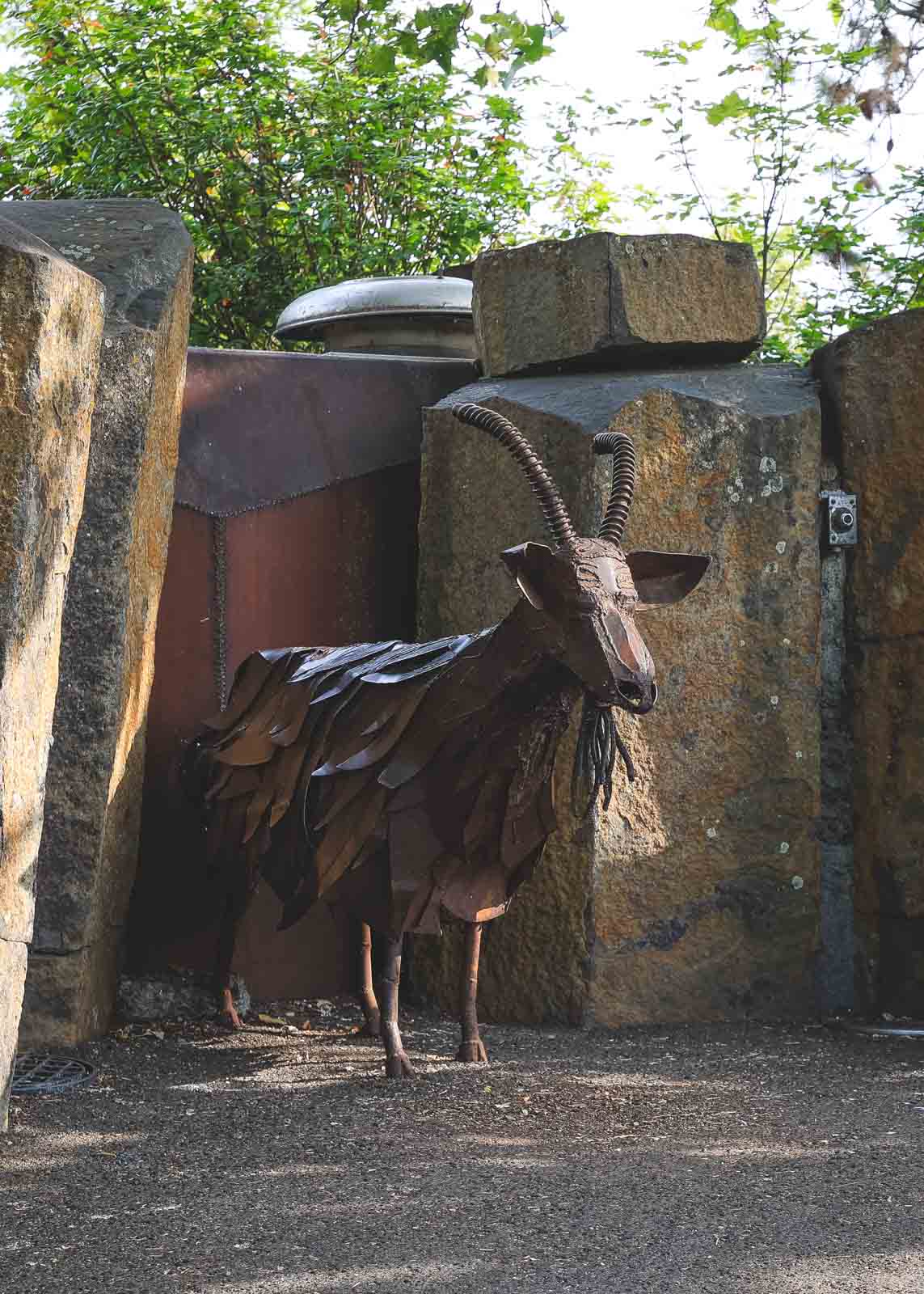
Ever seen a goat eat garbage? Riverfront Park’s Garbage Goat is a working vacuum sculpture a local nun welded together for Expo ’74, and it’s been “eating” trash fed to it by delighted kids — and adults — for over fifty years.
What’s new this year
Riverfront Park Connect, a hop-on-hop-off electric shuttle with seven stops around the park, started running May 1. Single rides cost $3, an all-day pass is $8, and it’s free for veterans — a narrated version covers Expo ’74 history for $15, which includes that all-day pass.
The bigger addition is still coming. Spokane Skylines, a 1,400-foot zipline, will launch from Place of Truths Plaza behind City Hall, run along the river under the Monroe Street Bridge, and land at Redband Park in Peaceful Valley.
Construction has been underway through summer, with the city and operator Mica Moon targeting a late summer or fall opening. Exact dates and pricing hadn’t been finalized as of this writing, so it’s worth checking Riverfront Park’s own channels before you build a trip around it. Either way, between the falls, the carousel, and a goat that eats trash, this park was worth the visit long before the zipline showed up.
Trip tips: grab a rental car to get out here, or lock in your hotel before the good rooms are gone.
Rules and fees change — always confirm current requirements before you go.