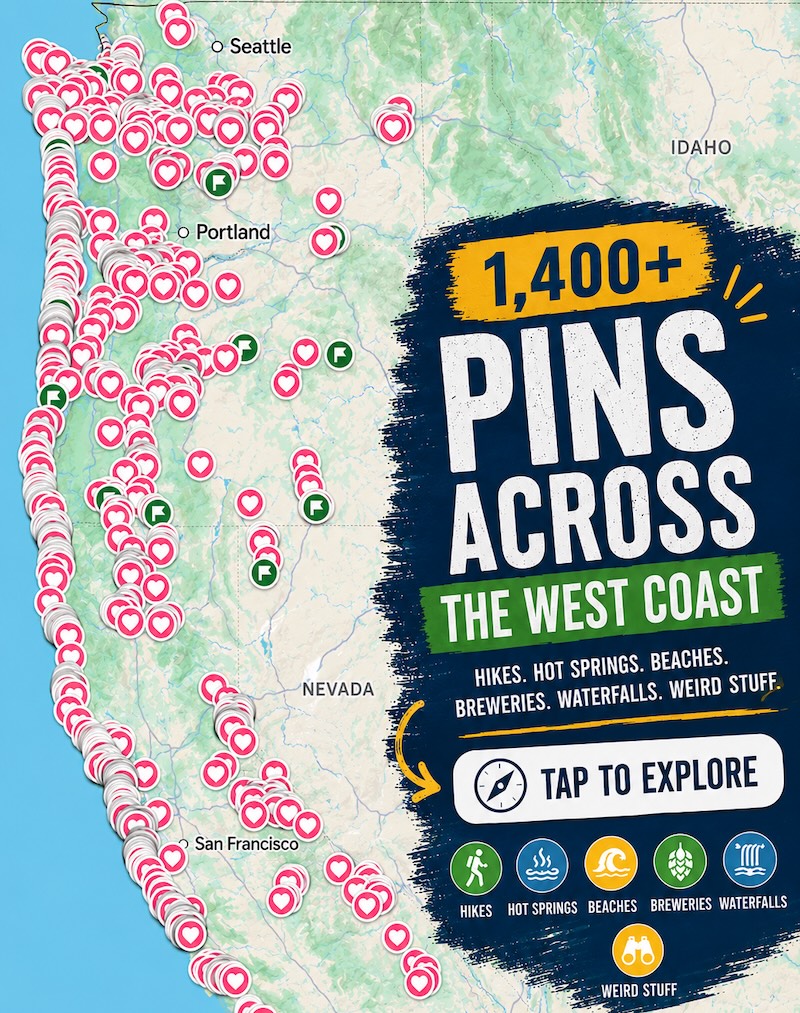
Seattle voted to save Pike Place Market from the wrecking ball, and a rainy fall morning is the best time to see why
Seattle came very close to bulldozing Pike Place Market, and a public vote in 1971 is the only reason you can still wander it today. That tells you something about the place before you even walk through the door.
It’s loud, crowded, a little chaotic, and completely worth it. Go on a gray fall morning and you’ll see it at its best.
Psst, we made you a West Coast Adventure Map. Nearly 1,900 of our favorite spots, already pinned, ready to load into Google Maps in two clicks: grab it here.
It started with about ten farmers on a boardwalk
Back in the early 1900s, Seattle farmers sold their produce through wholesalers on Western Avenue, and plenty of them barely broke even. The city’s answer was a public market where growers could sell straight to the people eating the food.
On August 17, 1907, roughly ten farmers set up along a boardwalk and hundreds of customers showed up. Before noon, every bit of produce had sold out.
📍 GET THE ULTIMATE PNW MAP 🗺️
Get our curated list of the best adventures, things to do, and places to grab a brew loaded onto your maps with just two clicks!
✅ Waterfalls ✅ Hikes ✅ Viewpoints
✅ Craft breweries ✅ National Parks ✅ 1400+ Pins


Then Seattle nearly tore it down
By the 1960s, a plan called Pike Plaza proposed demolishing the market and building something new. People pushed back hard, and a citizens’ initiative passed in November 1971 that created a historic district and put the market’s future in the public’s hands.
Today that district covers about seven acres, and the market draws more than 20 million visitors a year. Not bad for something that was almost a memory.
What to see once you’re inside
Start with Rachel, the 550-pound bronze piggy bank near the Pike Place and First Avenue corner. She’s been there since 1986, and the spare change she collects goes to social services run through the Market Foundation. Yes, you’ll queue for a photo.
Next, wander to the fish stalls, where fishmongers toss customers’ orders over the counter to a teammate who catches them and wraps them up. Then walk the farm stalls, where growers still rent daily tables, which is the same idea that launched the place in 1907.
For the weirder side of the market, duck into Post Alley and find the Gum Wall, a sticky, technicolor collage of chewed gum you’re invited to add to. It’s gross and fascinating in equal measure. And down the street at 1912 Pike Place, you’ll find the Starbucks that has operated there since 1977, if you want to see where it all started.
Why a rainy fall morning wins
Here’s my opinion: skip the summer weekend crush and go on a drizzly weekday morning in fall. The aisles breathe a little, the farm stalls feel like a real market again, and the steam off a hot drink hits differently under a leaky awning. Wear shoes that can handle wet cobblestones.
Looking for more to do in the city once you’ve had your fill? Our guide to the best things to do in Seattle has plenty of ideas for the rest of your day.
Trip tips: grab a rental car if you’re adding a Washington road trip to your Seattle stay, or lock in your hotel before the good rooms are gone.
So what’s your first stop at Pike Place: the pig, the fish, or the gum? Tell us in the comments.