
Gray whales swim past Cape Disappointment every winter, and early January is when the parade peaks
Summer gets all the whale hype, but Washington’s best wildlife show starts in the dead of winter. From mid-December, gray whales cruise south past Cape Disappointment on their way to Mexico, and you can watch them from a cliff.
No boat, no ticket, no seasickness. Just a warm jacket, a pair of binoculars, and a little patience.
Psst, we made you a West Coast Adventure Map. Nearly 1,900 of our favorite spots, already pinned, ready to load into Google Maps in two clicks: grab it here.
When the gray whales show up
Early January is the peak of the southbound migration, but whales can be spotted from mid-December through early February. They’re heading from Arctic feeding waters to warm breeding grounds in Baja California and Mexico, a trip of more than 5,000 miles.
Miss the winter window? They swing back north starting in mid-March. Younger whales, adult males, and females without calves pass first, and mothers with calves follow along the Washington coast in May.

📍 GET THE ULTIMATE PNW MAP 🗺️
Get our curated list of the best adventures, things to do, and places to grab a brew loaded onto your maps with just two clicks!
✅ Waterfalls ✅ Hikes ✅ Viewpoints
✅ Craft breweries ✅ National Parks ✅ 1400+ Pins


Where to stand at Cape Disappointment
Look for height. The two best lookouts are the Lewis and Clark Interpretive Center, perched on a cliff about 200 feet above the surf, and the North Head Lighthouse. Both sit inside Cape Disappointment State Park, and you’ll need a Discover Pass to visit either one.
Heads up on hours: from November 1 through March 31, the interpretive center is open Wednesday through Sunday, 10 a.m. to 5 p.m. It’s open on New Year’s Day, which lands right in peak whale season. Trained volunteers help visitors spot whales there in winter and spring, so ask what they’re seeing.
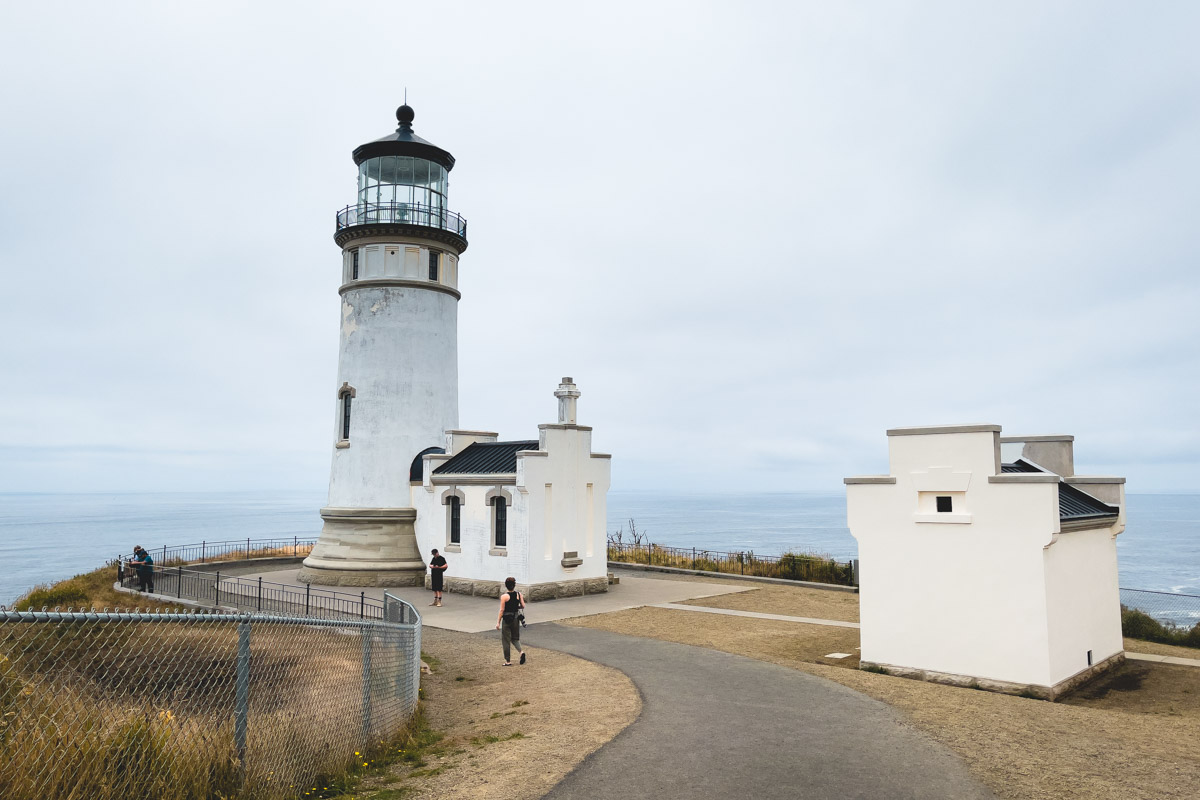
The lots at North Head and the interpretive center can’t take RVs, so park the big rig somewhere else. Planning a full day around the park? Our guide to things to do in Cape Disappointment State Park covers the trails, beaches, and both lighthouses.
How to actually spot a gray whale
Go early. Mornings are usually calmer, before the wind kicks up whitecaps that hide everything. Overcast is fine since there’s less glare, but skip the day of a big storm and the day after.
Scan for the blow, a puff of vapor that can shoot up to 12 feet when a whale exhales. Find one and stay on it, because where there’s one blow, more usually follow. Whales often take several short dives, then a longer one of three to five minutes, sometimes up to 10.
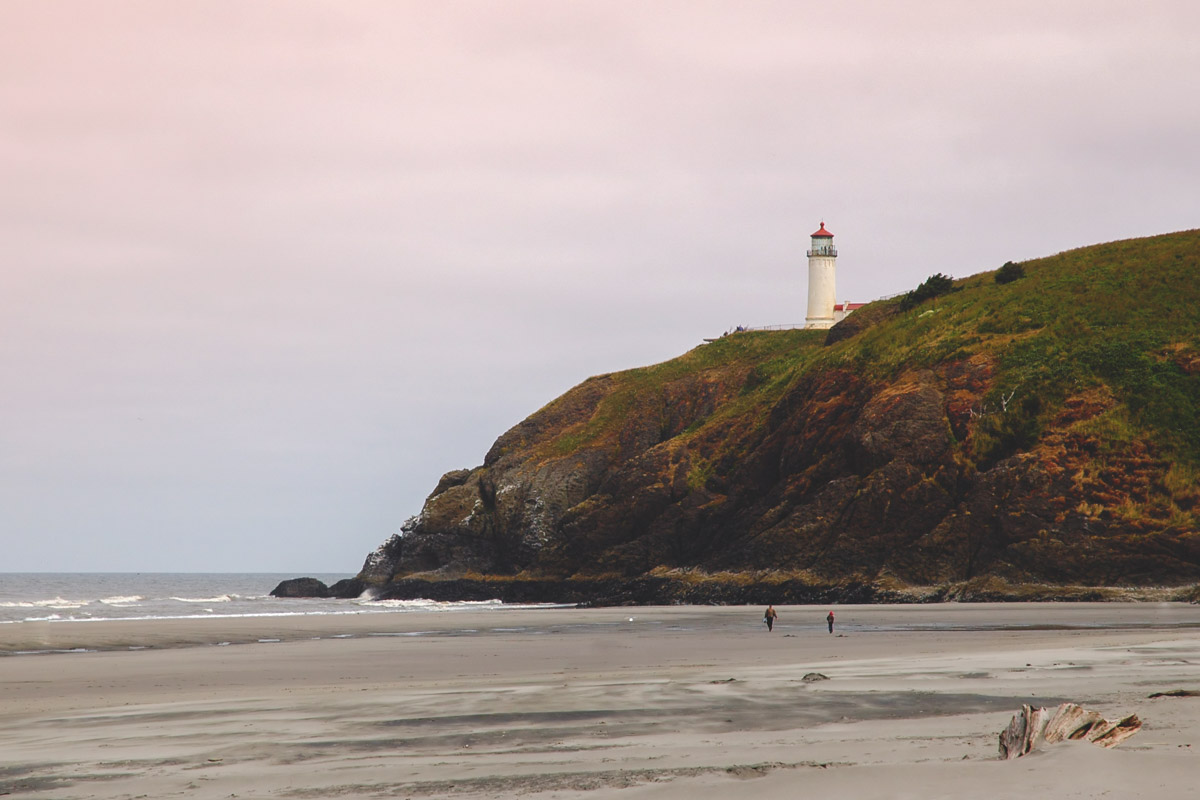
Tails and full breaches are rare, so don’t wait around for a big jump. Most of the time you’ll see a small slice of head and back, and honestly, that’s still pretty magical. Bring a thermos and give it at least an hour.
Gray whale facts to impress your friends
Adults run 40 to 50 feet long and weigh 30 to 40 tons. Calves arrive weighing nearly 2,000 pounds and about 15 feet long.
They swim about 6 miles per hour and hug the coast, usually in water no deeper than 300 feet. That’s why a headland like North Head makes such a good perch.
Gray whales have no teeth. They strain bottom-dwelling critters like small clams and worms through baleen instead.
Ever spotted a gray whale from shore? Tell us where in the comments, and tag us if you catch a blow on camera!
Trip tips: grab a rental car to get out here, or lock in your hotel before the good rooms are gone.
Rules and fees change, so always confirm current requirements before you go.